Red Cell Exchange
Red cell exchange for sickle cell — fewer crises, more living.
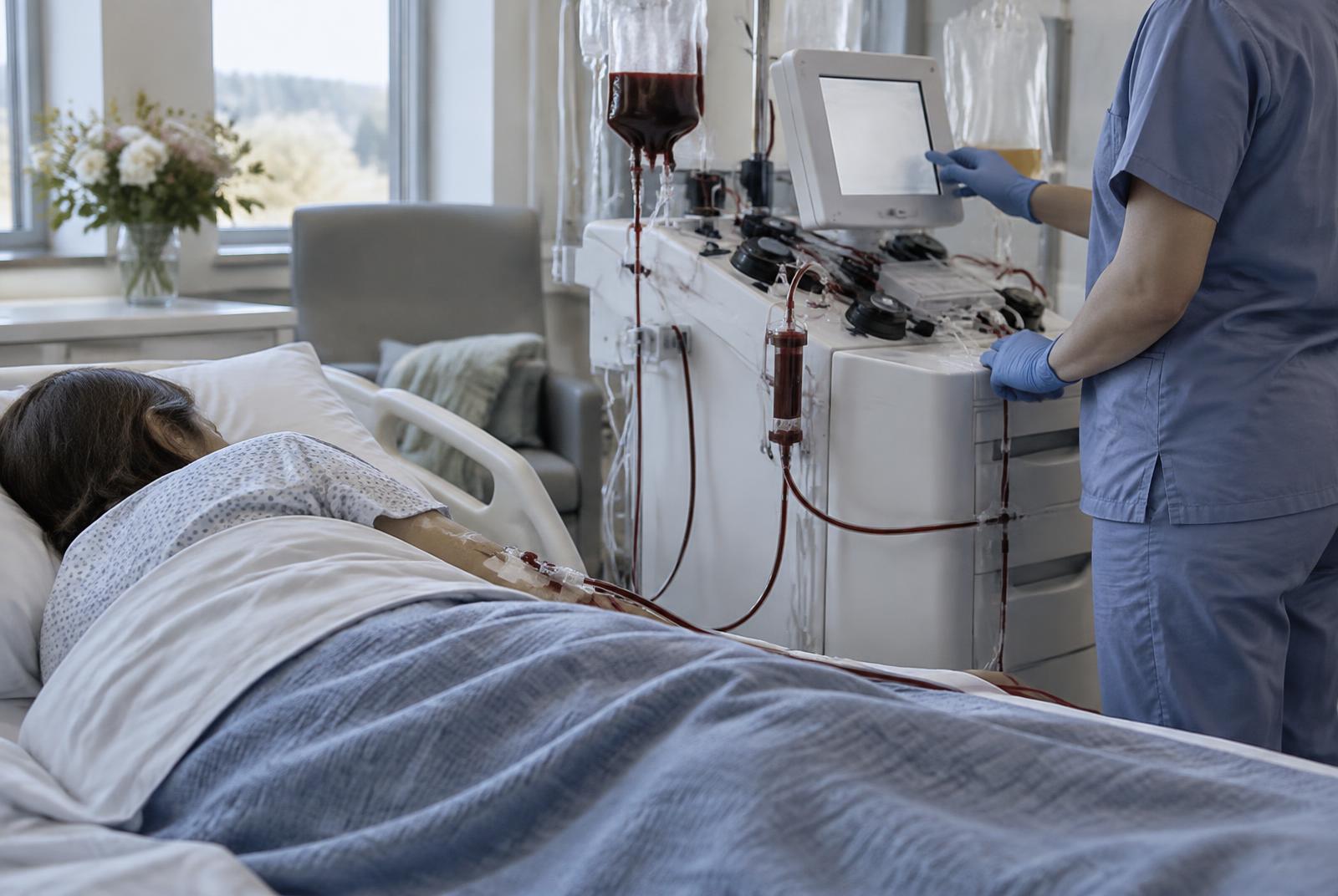
Our automated exchange removes sickled red blood cells and replaces them with healthy donor cells, in one carefully monitored session.
Haematology clinic: Tuesdays and Fridays, by booking only
Placeholder image
What is red cell exchange?
In sickle cell disease, red blood cells become stiff and sickle-shaped, blocking blood flow and causing painful crises. During red cell exchange, an apheresis machine gently draws your blood, separates out and removes the sickled red cells, and returns your blood with healthy donor red cells (haemoglobin AA) in their place.
Exchange vs top-up transfusion
Top-up transfusion
- Adds donor blood on top of your own
- Sickle cells stay in your body
- Repeated top-ups can build up iron and thicken the blood.
Red cell exchange
- Removes sickled cells while adding healthy ones
- Lowers sickle haemoglobin quickly
- Better control of iron and blood thickness.
Who may benefit
Your haematologist will decide whether red cell exchange is right for you.
Our results
From our published 5-year review (2020–2025), Therapeutic Apheresis and Dialysis, 2026.
Sickle haemoglobin (HbS) lowered from about 93% to about 19% on average.
Almost 1,000 red cell exchanges performed in over 6 years.
What to expect on the day
- 1
Pre-assessment
Blood tests and matching of donor red cells.
- 2
Getting comfortable
You rest in a comfortable bed. Our cardiothoracic surgeon sets up central line access (a safe route into a large vein) for the exchange.
- 3
The exchange
Usually about 4 hours, with you monitored throughout.
- 4
After care
Sometimes a short observation afterwards. Sometimes patients stay a few days to help a crisis resolve. You go home with follow-up instructions.
Regular exchange programme
Some warriors benefit from repeat exchanges. We schedule your sessions in advance and remind you, so your care stays on track.
Frequently asked questions
You'll feel the needle or line placement; the exchange itself is usually comfortable. Our team monitors you throughout.
From screened, matched donors, prepared to strict safety standards.
Up to about 4 months, which is roughly the time it takes for sickled red cells to be reproduced by the body. Your haematologist will advise how often you may need it.
In many cases, yes. We assess each patient individually.
Costs depend on your needs. Contact us for an estimate and to check HMO coverage.
Take the first step toward fewer crises.
Haematology clinic: Tuesdays and Fridays, by booking only